



.png)
.png)

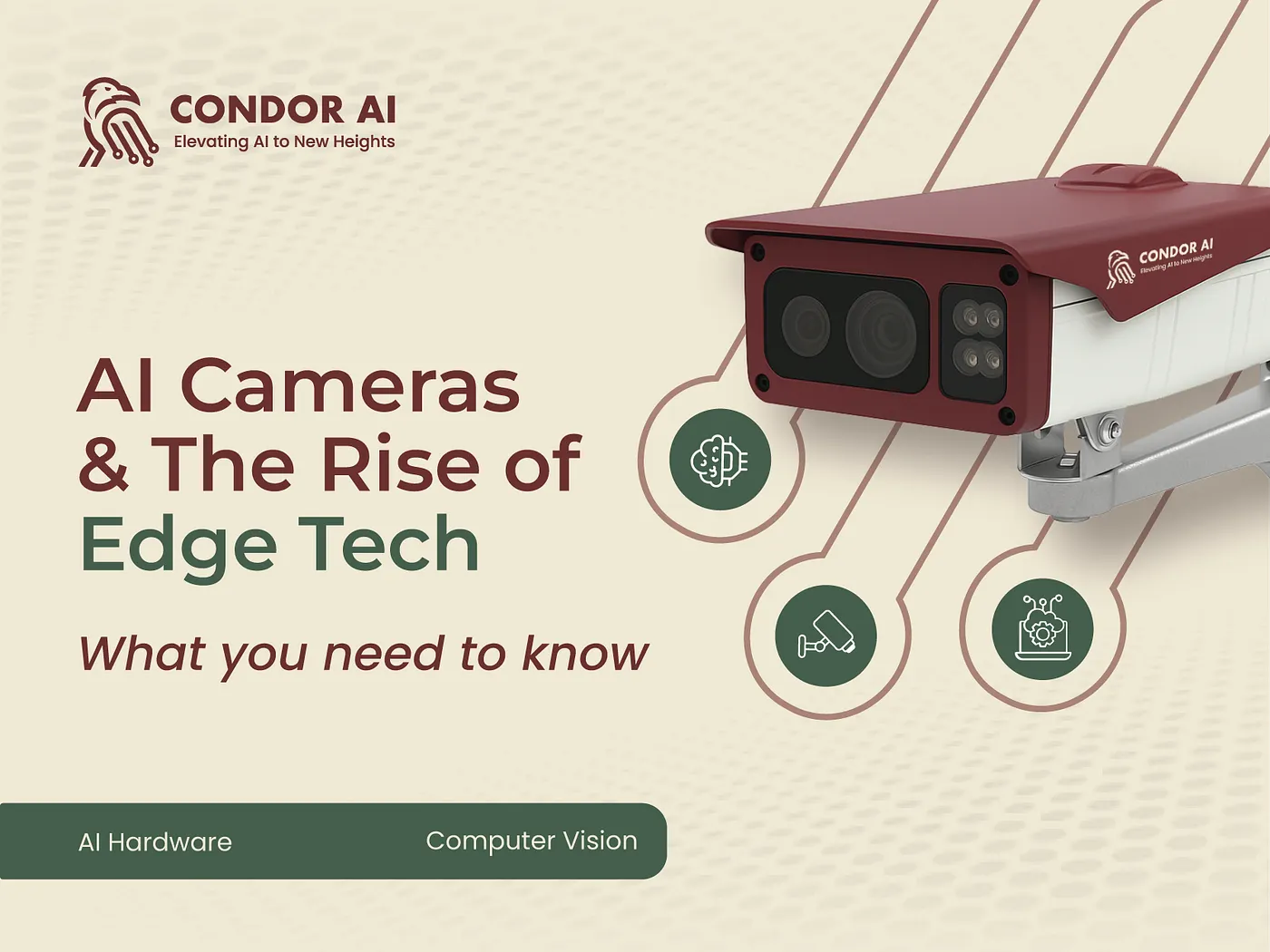
The traditional role of surveillance cameras is rapidly evolving. What used to be passive, image capturing devices are now becoming intelligent systems capable of interpreting and acting on visual data in real time. This shift is being driven by the growing demand for AI at the edge, where insights are generated locally rather than in the cloud. The result is a new class of products: AI cameras.
AI cameras are integrated devices that combine imaging hardware with onboard compute capabilities, allowing them to process data directly at the source. Instead of sending video streams to a central server for analysis, these systems run machine learning models locally. This enables real time decision-making, reduced network dependency, and faster response times, all without compromising data privacy.
AI cameras are commonly equipped to perform tasks like object detection, facial recognition, vehicle classification, people counting, intrusion alerts, and many more. These capabilities are made possible by the integration of edge computing, specifically edge AI computing chips.
The need for real-time situational awareness in environments such as manufacturing floors, traffic intersections, and retail spaces has pushed AI to move closer to the source of data. Edge analytics reduces reliance on internet connectivity and eliminates latency caused by cloud processing. It also reduces bandwidth usage and lowers the overall cost by transmitting relevant analytics.
From a security and compliance standpoint, processing sensitive information locally allows organizations to better adhere to privacy regulations. Applications like license plate recognition or behavioral analysis benefit significantly from this localized architecture, as they avoid the risks associated with transmitting sensitive data to third-party servers.
The advent of 5G connectivity further amplifies the potential of AI at the edge. With ultra-low latency and high-speed uplinks, 5G enables real-time communication between edge devices and cloud systems when necessary, without compromising on responsiveness. For AI cameras, this means fast, synchronized coordination between fleets of devices, agile deployment readiness, and hybrid edge-cloud intelligence models that weren’t feasible with traditional networks.

Building high-performance AI camera systems starts with choosing the right SoC (System on Chip) or AI accelerator. These components shape your system’s performance, power consumption, and scalability in real-world conditions.
While NVIDIA Jetson leads with a mature and developer-friendly edge AI stack — benefiting from its early mover advantage — there are several strong alternatives that cater to diverse needs. Platforms from Qualcomm, AMD (Xilinx), Hailo, SiMa.ai, and others offer competitive solutions optimized for specific workloads, power profiles, and integration needs.
Selecting the right compute platform depends on factors like AI model complexity, video processing requirements, power constraints, and software ecosystem compatibility.
AI cameras are already demonstrating tangible value across multiple sectors. In logistics, they enable automated tracking of goods and vehicle movement. In manufacturing, they perform real-time quality checks and flag anomalies during production. In smart cities, they detect traffic violations, count vehicles, and monitor pedestrian flow.

Retailers use AI cameras to understand customer footfalls, optimize store layouts, and measure customer engagement. Healthcare facilities are beginning to adopt them for patient monitoring and safety alerts.

The market for AI cameras is expected to grow significantly over the next five years, driven by increased demand for automation, tighter data privacy regulations, and the expanding capabilities of edge devices. According to recent industry reports, the global Edge AI hardware market is projected to grow from $24.2 billion in 2024 to $54.7 billion by 2029, (MarketsandMarkets), reflecting the rising demand for real-time, on-device intelligence across sectors.
AI cameras represent a convergence of optics, compute, and applied intelligence. They exemplify a broader shift in the AI industry away from centralized, resource heavy pipelines and toward lean, resilient, and context-aware systems.
At Condor AI, we design and deploy production-grade AI camera solutions that integrate edge compute, domain-specific models, and orchestration platforms for remote management. Our systems are engineered for reliability, scalability, and real-time responsiveness.
The evolution of AI cameras is not just a hardware innovation, it reflects a fundamental change in how organizations think about data, intelligence, and autonomy.
Edge is not just a location. It’s where intelligence becomes actionable.


.png)
.png)

Our team is here to help, send us a message and we’ll reach out shortly.


Everything you need to know about Condor AI Hardware, Edge AI Orchestration Platform, and AI Engineering Services

We design, build, and run real-world AI with one unified stack: edge AI hardware and cameras, KALKI (our all-in-one platform), integrated solution kits, and engineering services. You can adopt one piece or the whole stack.
We champion Edge AI for latency, cost, and privacy benefits. We also support hybrid patterns when cloud is useful for storage, analytics, or aggregation.
A single suite for hardware + software + platform + delivery. Devices are tuned with hardware-defined software, and fleets are managed by KALKI for onboarding, updates, security, and telemetry so pilots become production.
Raptor (dual-sensor AI camera) is available now. Falke (compact single-lens AI camera), DashCam (AI powered compact camera for edge scenario)and Edge Gateway (on-prem compute for existing IP cameras) are coming soon.


